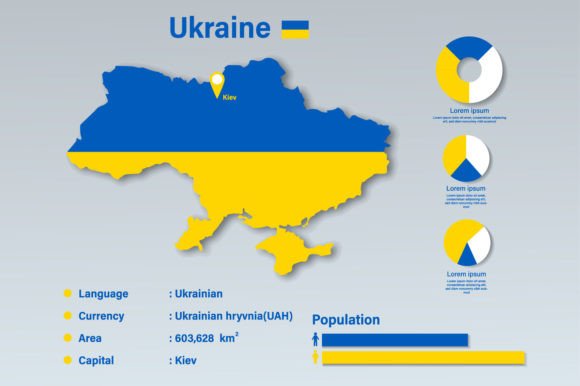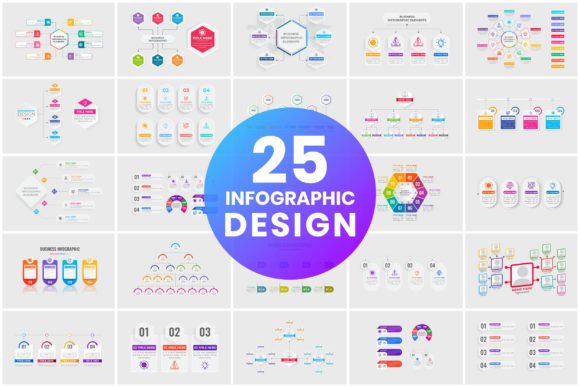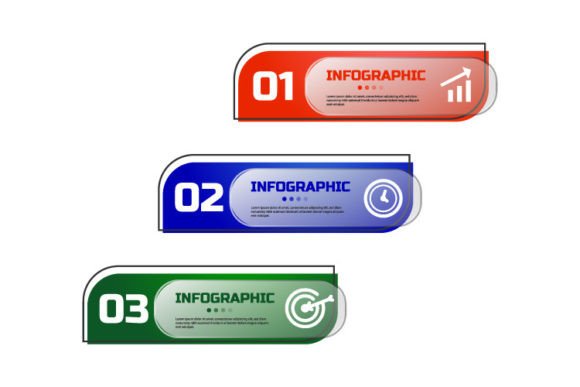
The Versatile Power of Infographic Banner Design Vector Templates
In today's visually-driven world, the ability to communicate information quickly, clearly, and creatively is paramount. Whether for a business presentation, an educational poster, or an online advertisement, the design of your materials can make or break their impact. At the heart of many successful visual communications lies a powerful, flexible resource: the infographic banner design vector template. This article explores what these templates are, why they are so significant, and how their various file formats—like AI, EPS, PNG, JPG, and SVG—serve as indispensable tools for print, decoration, element design, and background creation.
What is an Infographic Banner Design Vector?
Let’s start from the ground up. An infographic banner is a visual representation that combines data, text, and graphic elements into a cohesive, often elongated layout designed to inform or persuade. Its primary purpose is to simplify complex information, making it digestible and engaging for the viewer. When this design is created as a "vector," it refers to the specific digital format used to build the artwork.
Unlike raster images (like typical photographs made of pixels), vector graphics are constructed using mathematical formulas—paths, points, lines, curves, and shapes. This means they are infinitely scalable. You can resize a vector banner from a small web icon to a massive billboard print without any loss of quality or resolution. This scalability is the core technical advantage, but the practical benefit is the incredible flexibility it grants to designers, marketers, educators, and creatives of all levels.
The Purpose and Significance in Modern Communication
Infographic banners serve a crucial role across multiple domains. In business and marketing, they are used for social media campaigns, website headers, trade show displays, and internal reports to highlight key metrics, process flows, or product benefits. In education, they transform dry curricular content into captivating classroom wall charts or lecture slides. For daily activities and community work, they appear as event announcements, public health guidelines, or community center decoration.
The significance of using a template, specifically a vector template, lies in its blend of structure and freedom. A template provides a professionally designed starting framework—a logical layout, balanced color palette, and placeholder spaces for icons, charts, and text. This saves immense time and ensures a baseline of visual coherence. Because it's vector-based, every single element within that template can be edited, rearranged, recolored, or resized to fit the exact needs of the project, fostering both efficiency and creativity.
A Closer Look at the Core File Formats
The promise of versatility is fully realized in the suite of file formats typically included in a comprehensive infographic banner design vector package. Understanding these formats clarifies their practical relevance and helps users select the right tool for the right job.
- AI (Adobe Illustrator): This is the native source file for the vector design. Opening the .AI file in Adobe Illustrator gives you complete, unrestricted access to every layer, shape, and path. It's the format for deep, custom editing—changing the core structure, creating new graphic elements, or fully repurposing the design.
- EPS (Encapsulated PostScript): A versatile, legacy vector format that can be opened by many illustration and page-layout programs, even some that aren't Adobe products. It’s excellent for sharing vector artwork across different software ecosystems and is often preferred for professional print production.
- PNG (Portable Network Graphics): A raster format provided for immediate use. PNGs typically have a transparent background, making them perfect for quick digital placement over websites, video edits, or PowerPoint slides where you don't need to edit the individual elements but need a clean, high-quality image.
- JPG (JPEG): Another ready-to-use raster image, usually with a solid background. JPGs are universally compatible and ideal for situations like email newsletters, simple document insertion, or as a visual reference.
- SVG (Scalable Vector Graphics): The modern web standard for vector imagery. SVG code can be embedded directly into websites and scales perfectly on any screen size, crucial for responsive web design. It also allows for animation and interaction through coding, bridging design and web technology.
Fitting into Work, Creativity, and Technology
This multi-format approach seamlessly fits into modern workflows. A graphic designer might start in the .AI file to tailor the banner for a client, export an .EPS for the print shop, and also provide a .SVG for the client's web developer. A business professional with no design software might simply use the provided .PNG to create an engaging social media post in minutes. An educator could use the .JPG in a digital handout and print a large-scale .PNG version for the classroom wall.
In terms of creativity, these templates are not rigid cages but springboards. A common misunderstanding is that using a template yields generic, cookie-cutter results. The reality is quite the opposite. The editable vector nature invites customization. Changing the color scheme to match your brand, swapping out icons to better represent your data, or adding your own typography transforms the template into a unique creation that maintains professional design principles—something especially valuable for beginners who may not yet have mastered layout and composition.
Practical Applications: From Print to Digital Backgrounds
The included files explicitly support use for "print, decoration, element design, and background." Let's explore examples of each to build a broader understanding.
- Print: The vector (.AI, .EPS) and high-resolution raster (.PNG, .JPG) files ensure print-ready quality. Examples include large conference banners, A4 flyers for a local event, or glossy magazine advertisements. The design's clarity remains sharp at any size.
- Decoration: Here, the infographic banner transcends pure information delivery. It becomes a visual enhancer for a space. Think of a beautifully designed vector banner about "Our Company Values" printed on acrylic and mounted in an office lobby, or a thematic "History of Innovation" banner decorating a university lab corridor.
- Element Design: This is a powerful, often overlooked use case. Because the template is made of distinct vector elements (icons, charts, dividers, text boxes), you can open the source file and extract just one component. You might take a single attractive data chart from the banner and reuse it in a different report, or isolate a decorative flourish to use as a repeating element on a website.
- Background: The full banner layout, often with subtle textures and balanced color gradients, can serve as an excellent background image. The .PNG or .JPG could be used as the backdrop for a video presentation title slide, or the .SVG could serve as a full-width, scalable header background on a webpage, adding visual interest behind the main content.
Building a Strategic Understanding
Ultimately, investing in or utilizing a quality infographic banner design vector template is not just about getting a single image. It's about acquiring a multiformat visual asset pack that can be adapted to countless scenarios over time. It respects the different technical requirements of print and digital media. It empowers users at different skill levels—from the expert editor to the casual implementer.
In a landscape where attention is scarce and information overload is common, these templates provide a structured path to clarity and engagement. They embody the principle that good design should serve communication, not hinder it. By understanding the nature of vector graphics and the strategic purpose of each accompanying file format, anyone from a small business owner to a classroom teacher can leverage these tools to enhance their message, decorate their environment, and streamline their creative process, making sophisticated visual communication more accessible and effective for all.