The Hidden Architecture of Our World: A Guide to Earth's Internal Structure
When we look at a globe or gaze upon the landscape, we see the surface of our planet: mountains, oceans, forests, and cities. But beneath this familiar exterior lies a complex, dynamic, and hidden architecture that makes Earth the unique and life-supporting world it is. Understanding the Earth's internal structure is not just an academic exercise; it's the key to comprehending everything from volcanic eruptions and earthquakes to the magnetic field that protects us and the very formation of continents. It’s the story of our planet's past, present, and future, written in layers of rock and metal.
The Blueprint: Earth's Layered Composition
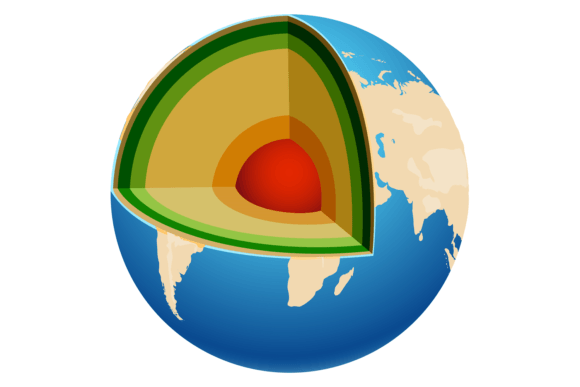
Just as an architect's blueprint reveals the structural components of a building, a diagram of Earth's internal layers—often seen as a simple Earth structure infographic element—reveals its fundamental components. These visual tools, available as downloadable EPS, JPG, SVG, or transparent PNG files, distill a vast scientific understanding into an accessible format. They typically show our planet as a series of concentric shells, each with distinct physical and chemical properties. This layered model is the result of billions of years of planetary formation and differentiation, where heavier materials sank to the center and lighter materials rose to the top.
The Outer Shell: The Crust
This is the layer we live on. The crust is remarkably thin, akin to the skin of an apple relative to its size. It is not uniform; there are two main types. The continental crust, forming our landmasses, is thicker (20-70 km) and composed largely of less dense granite-like rocks. The oceanic crust, underlying the seafloor, is thinner (5-10 km) and denser, made primarily of basalt. The crust is the stage upon which all surface geology and human activity plays out, but it is constantly being created, destroyed, and deformed by the movements of the deeper layers.
The Middle Mantle: Earth's Massive Engine
Below the crust lies the mantle, extending nearly halfway to the planet's center. This is the largest layer by volume, a solid yet malleable zone of silicate rock. The upper mantle, combined with the crust, forms the rigid lithosphere. Beneath that, the asthenosphere is a hotter, weaker region where rock can flow slowly over millions of years. This ductility is the driving force behind plate tectonics. The mantle's convective currents—like a pot of slowly simmering soup—cause the lithospheric plates to move, leading to mountain building, volcanoes, and earthquakes. It is Earth's great internal engine.
The Core: The Heart of the Planet
At the center lies the core, divided into two distinct parts. The outer core is a liquid layer of molten iron and nickel. Its motion, generated by Earth's rotation and heat flow, creates electrical currents. These currents, in turn, generate our planet's global magnetic field, the invisible shield that deflects harmful solar radiation and allows life to thrive. Beneath the swirling outer core is the inner core, a solid ball of iron and nickel under immense pressure. Despite temperatures exceeding the surface of the sun, the extreme pressure keeps it solid. This solid inner core is a crucial component in the dynamics of the magnetic field and the overall stability of the planet.
Why Understanding This Structure Matters
This knowledge goes far beyond geology textbooks. The practical relevance of Earth's layered structure permeates modern life in profound ways.
Predicting and Preparing for Natural Hazards
Every earthquake and volcanic eruption is a direct message from Earth's interior. Seismology uses waves from quakes to "image" the interior, much like a medical ultrasound. By understanding how energy travels through different layers, scientists can locate faults, assess risks, and contribute to building codes and early warning systems. Volcanology relies on understanding magma generation in the mantle and its ascent through the crust. This knowledge is vital for safeguarding populations and infrastructure.
Resource Exploration and Technology
The distribution of Earth's resources is dictated by its internal processes. Metallic ores are often concentrated by hydrothermal systems driven by mantle heat. Fossil fuels are formed in sedimentary basins created by crustal movement. Even our ability to navigate with compasses and protect satellites depends on the magnetic field born in the liquid outer core. Modern geophysical surveying techniques, which probe these layers remotely, are fundamental to resource discovery and environmental management.
Context for Climate and Life’s History
The long-term climate and the very existence of continents are tied to plate tectonics. The cycling of carbon between the atmosphere, oceans, and crustal rocks regulates temperature over eons. The formation of continents via crustal processes provided the stable platforms for complex life to evolve. Understanding the deep Earth helps us place surface changes—both natural and human-induced—into the broader context of planetary history.
Clarifying Common Misunderstandings
Despite clear infographics, some common assumptions persist.
- "The Mantle is Liquid Molten Rock": While parts of the asthenosphere are ductile and can flow, the mantle is overwhelmingly solid. Its rock deforms slowly under immense heat and pressure, not like a liquid lava lake.
- "The Core is a Hollow Space or Full of Fire": Scientific evidence from seismology and magnetism confirms it is a dense, metallic structure. The heat originates from primordial formation energy and radioactive decay, not combustion.
- "These Layers Are Static and Unchanging": Earth's interior is dynamic. The core's convection powers the magnetic field, which can flip polarity. Mantle convection drives the constant, slow dance of the tectonic plates, meaning the internal architecture is actively shaping our surface world every day.
How This Knowledge Builds a Broader Understanding
Grasping Earth's structure is a foundational piece of scientific literacy. It connects seemingly disparate phenomena into a coherent planetary story.
- A Systems Thinking Approach: It teaches us to see Earth as an interconnected system, where deep processes (core magnetism) directly affect surface conditions (atmospheric protection) and life.
- Scale and Perspective: It provides a humbling sense of scale—human history occurs on the thin, dynamic crust atop a vast, ancient engine.
- Interdisciplinary Relevance: This topic sits at the intersection of geology, physics, chemistry, environmental science, and even engineering, showcasing how scientific disciplines converge to solve complex problems.
From the classroom to the research lab, and from the news report on an earthquake to the strategic planning of a mining company, the model of Earth's layers serves as a crucial mental map. A simple planet layers and core infographic on a white background is more than just an illustration; it is a gateway to understanding the forces that have shaped, and continue to shape, our home in the cosmos. By exploring this hidden architecture, we gain not only knowledge of rocks and metals, but a deeper appreciation for the dynamic and fragile planet we call home.