Why Blue Shape Templates Are Essential for Business Presentations
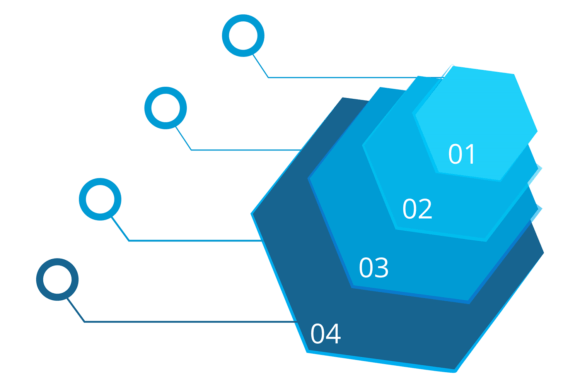
In the world of professional communication, clarity is king. An Infographic Element: Blue Shape Template is a pre-designed set of visual assets—like circles, arrows, flowcharts, and icons—arranged in a cohesive, often minimalist style using a blue color palette. Think of it as a toolkit for building a visual story. These templates are typically available in versatile file formats, including EPS for vector editing, JPG for easy placement, SVG for web scalability, and transparent PNG for seamless layering over any background.
Their core purpose is to transform complex or dry information into an engaging, easy-to-follow narrative. Instead of describing a multi-step business process in a long paragraph, you can map it out visually with connected blue shapes, making the sequence and relationships instantly understandable. The value lies in their simplicity and reusability. They offer a professional aesthetic without requiring advanced design skills, saving significant time and ensuring visual consistency across your materials.
The Practical Benefits of Using a Blue Shape Design System
The appeal of a specific blue shape template goes beyond its color. Blue is universally associated with trust, stability, and professionalism, making it a safe and effective choice for corporate and educational materials. But the real magic is in the template’s structure. Having a consistent set of shapes means every slide, diagram, or chart you create feels part of a unified family, strengthening your brand’s or project’s identity.
For a beginner or a busy professional, this solves several key problems. First, it eliminates the daunting task of starting from a blank canvas. Second, it provides guardrails against poor design choices, ensuring layouts are balanced and readable. Third, it dramatically accelerates production. You're not searching for icons or debating color schemes; you're assembling pre-approved components to build your message efficiently.
Where You Can Apply These Visual Tools
The use cases are remarkably broad. A freelancer might use an Infographic Element: Blue Shape Template to visually outline their service workflow in a client proposal, making their process look polished and reliable. A small business owner could employ it to create a clear onboarding flowchart for new employees, reducing confusion and training time.
In marketing, these templates are perfect for social media posts explaining a product feature or for blog graphics that break down a complex topic into simple steps. Educators and trainers find them invaluable for creating lecture slides or handouts that guide students through a logical progression of ideas. Even hobbyists running a community club can use a simple blue shape flowchart to explain event planning procedures to their team.
The isolated design on a white background, with transparent PNG options, is particularly crucial. It means the graphic can be placed on any document, website, or presentation without a clashing background box. You can overlay it on a colored slide, integrate it into a report header, or feature it on a webpage, and it will look like it was custom-made for that space.
Realistic Examples for Immediate Inspiration
Let’s move from theory to practice. Imagine you need to explain your company's customer support pipeline. Using the blue shape template, you could create a diagram where a blue circle represents "Customer Query," connected by a blue arrow to a rectangle labeled "Ticket Logged," flowing to another shape for "Issue Resolution," and finally to a star shape for "Feedback Collected." The visual path tells the story faster than words.
Another example is project planning. A blogger planning a new content series could use the template's shapes to map out the stages: Research (blue hexagon), Writing (blue rectangle), Editing (blue circle), Publishing (blue arrow pointing forward), and Promotion (blue interconnected nodes). This not only plans the project but also creates a graphic that can be shared with collaborators or even with readers to show "what's coming next."
The different file formats serve specific needs. Use the editable EPS or SVG file if you need to tweak a shape's size or color slightly in a vector program like Adobe Illustrator or Inkscape. The JPG is your go-to for quick insertion into PowerPoint, Word, or an email. The transparent PNG is essential for digital use where you want the graphic to float cleanly over your existing design elements.
Important Considerations Before You Start
While these templates are incredibly helpful, a few thoughtful considerations will ensure you get the best result. First, assess the scope of the template. Does it include the specific shapes you frequently need—like timelines, hierarchies, or comparison matrices? A good business process template should offer a variety of connectors and containers.
Second, consider adaptability. Even with a pre-designed set, your content is unique. Ensure the template's style is flexible enough to represent your ideas without forcing you to contort your message to fit the shapes. The design should serve your information, not the other way around.
Finally, think about consistency. If you choose a blue shape template for one presentation, using a similar or identical set for related materials (like follow-up reports or training manuals) reinforces professionalism and aids comprehension. Disparate designs for the same topic can create subconscious confusion.
In essence, an Infographic Element: Blue Shape Template is more than just a graphic; it's a communication framework. It empowers anyone, from entrepreneurs to educators, to present their processes with clarity and confidence, ensuring their audience not only hears their message but truly sees it. By choosing a well-crafted template with multiple file formats, you invest in a resource that saves time, enhances understanding, and elevates the perceived quality of your work across countless applications.