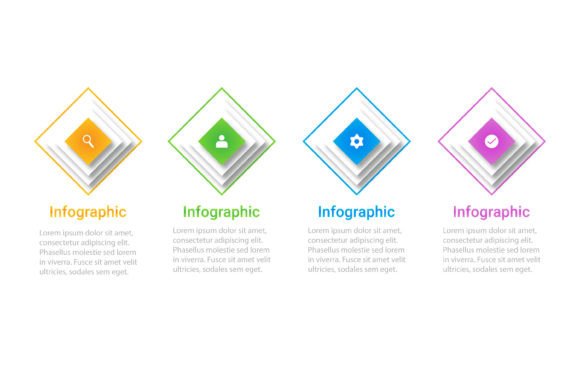
The Practical Value of a Four-Step Modern Infographic Template
In today’s information-driven environment, clarity and visual engagement are paramount. For professionals tasked with explaining processes, showcasing services, or outlining strategies, a well-structured infographic can be a decisive tool. The Four Steps Modern Infographic Elements package represents a specific resource designed to address this need. It is not merely a set of graphics; it is a focused template built around a classic and effective narrative framework: the four-step progression.
What This Template Package Actually Provides
When evaluating such a product, understanding its concrete deliverables is crucial. This package typically includes several core file formats, each serving a distinct purpose in a professional workflow. The AI file is the native Adobe Illustrator document, offering the highest level of editability for users comfortable with that software. The EPS file is a vector format that maintains scalability and can be imported into a wider range of design applications. The Preview JPEG file provides a quick visual reference. The stated features—editable text, editable vector elements, and the use of free fonts—are fundamental. This combination means the core design, including icons, shapes, and layout, can be modified without loss of quality, and the typography can be legally used and altered without licensing concerns.
Core Characteristics and Design Philosophy
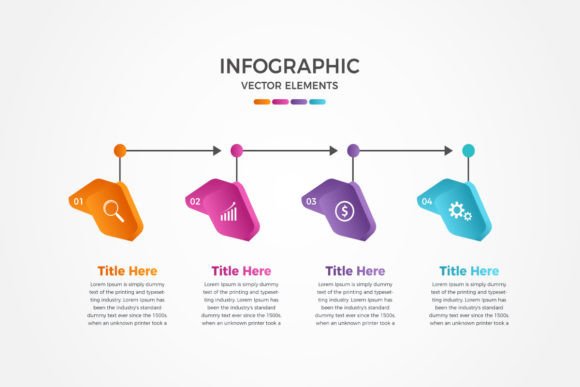
The “four-step” structure is its defining characteristic. This framework is inherently logical and digestible, making it suitable for explaining sequential processes, staged solutions, or phased projects. The “modern” aesthetic likely implies clean lines, a balanced use of space, contemporary iconography, and a color scheme that is professional yet visually distinct. The strength of such a template lies in its foundational structure. It provides a consistent visual rhythm—each step is given equal visual weight and clear separation—which aids comprehension. Its practical value is efficiency. Instead of building this logical layout from scratch, a user can start with a proven visual structure and focus their energy on customizing the content.
Performance in Real-World Application
In practice, the utility of the Four Steps Modern Infographic Elements hinges on its flexibility and integration into one’s workflow. For a marketer needing to illustrate a client onboarding process, the template offers a ready-made vessel for that information. An educator could adapt it to visualize a scientific method or a historical sequence. The editable vector nature ensures that if a particular icon doesn’t fit, it can be replaced; if the color palette clashes with a brand, it can be adjusted. This level of customization is essential for professional use, where aligning with existing brand guidelines is non-negotiable.
Quality is judged by the precision of the vector artwork and the intelligence of the layout. Crisp, scalable vectors with properly defined paths and layers indicate a professional source file. Usability depends not only on the software compatibility but also on the organizational clarity of the template file itself. Are layers logically named? Are text elements easily selectable? These details profoundly affect the time required for customization. The presentation’s effectiveness is rooted in its simplicity. A four-step infographic avoids overwhelming the viewer, making it effective for presentations, website graphics, printed handouts, or social media posts where attention is limited.
Evaluating Long-Term Value and Reliability
The long-term value of a template like this extends beyond a single project. Once customized and mastered, it can become a reusable asset within an organization. A small business owner might use the same underlying structure to create infographics for different services, maintaining brand consistency across communications. The reliability comes from its format. Vector files do not degrade; they can be scaled for a brochure or a billboard without loss of fidelity, ensuring the investment in customization pays off across multiple outputs and over time.
Who Benefits Most from This Resource?
Identifying the right audience for this tool helps in assessing its fit. The primary beneficiaries are individuals and teams who need to produce clear, professional visual content regularly but may not have extensive time or budget for custom design from scratch.
- Entrepreneurs and Small Business Owners: For explaining their service delivery process, value proposition stages, or operational methodology to customers or investors.
- Marketing Professionals and Freelancers: As a rapid solution for client projects involving process explanation, campaign phases, or product feature rollouts.
- Educators, Trainers, and Bloggers: To create instructional materials, summarize complex topics in a stepwise fashion, or enhance blog posts with embedded visual summaries.
- Corporate Communicators and Internal Teams: For illustrating new internal protocols, safety procedures, or project management stages in an easily distributable format.
The situations where it is most appropriate are those requiring explanation, simplification, and sequential storytelling. It is less suitable for purely data-heavy visualizations (like charts with many variables) or for non-linear, conceptual maps.
Professional Observations and Practical Recommendations
From a practical standpoint, success with this template depends on a few key actions. First, thoroughly review the preview and file structure before customization to understand the layout constraints. Second, always replace the placeholder text with concise, actionable language suitable for your audience; the design is a shell, the content is the core. Third, leverage the editable vectors to align colors and shapes with your brand identity—this turns a generic template into a branded asset. A possible limitation is inherent in its fixed structure: if your process genuinely has five or six critical steps, forcing it into a four-step framework may misrepresent the information. In such cases, the template could serve as a starting point, but significant structural modification would be required.
Making an Informed Decision for Your Needs
Determining whether the Four Steps Modern Infographic Elements fits your needs involves a straightforward assessment. Consider your typical projects: do they often involve explaining stages or steps? Evaluate your technical comfort: are you or someone in your team able to work comfortably with AI or EPS files in a vector design program? Reflect on your brand needs: can the template’s modern aesthetic be adapted to feel cohesive with your other materials? If the answers lean positive, this template offers a significant shortcut. It provides a professional baseline design, reduces initial layout time, and delivers formats suitable for high-quality output. Its value is not in being a finished product, but in being a well-constructed, adaptable foundation. For those who regularly communicate stepwise information, it is a pragmatic resource that can enhance clarity, save time, and maintain a consistent visual standard across multiple communications.